Inner ring, outer ring and cage split into two halves that close into a full circle on assembly — no dismantling of shafts, couplings or adjacent equipment. Large-plant bearing changes drop from days to hours. ZBZ builds to the standard of SKF Cooper — the split bearing specialist within Sweden's SKF group — in bores from Ø 100 to 1,600 mm, with split housings, seals and lubrication delivered as one package.
All three core components of a split roller bearing — inner ring, outer ring, and the roller-and-cage assembly — are split axially into two identical halves with precision hand-scraped joint faces. On site, the halves are closed around the shaft and into the housing, bolted tight, and the bearing runs like a one-piece design.
Its value is not "turning faster" but "fitting where one-piece bearings cannot":
Designed mainly for radial loads, split bearings serve conveyor pulleys, fans, continuous casting, marine shafting, mixers and drying cylinders — wherever the shaft cannot come out.
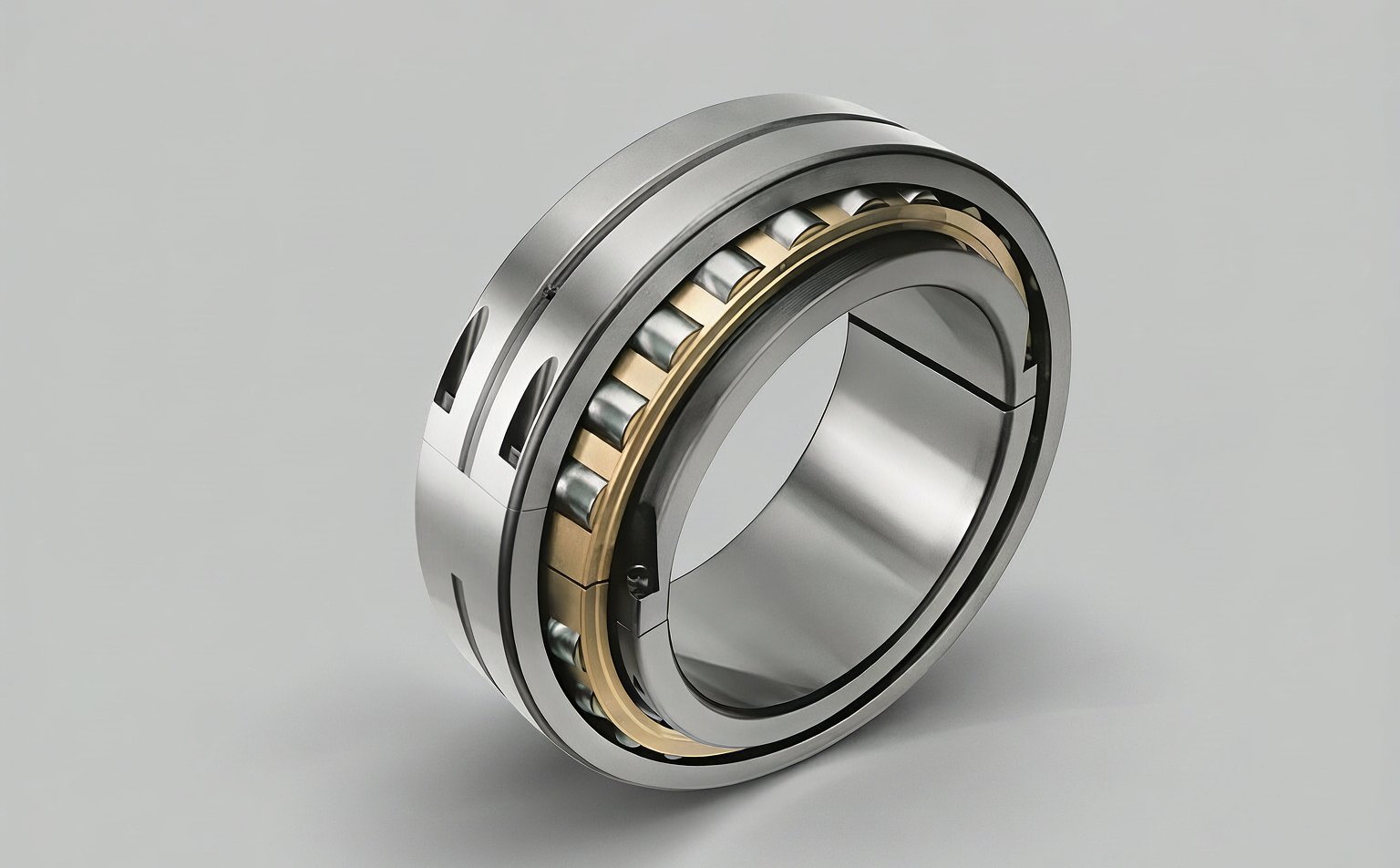
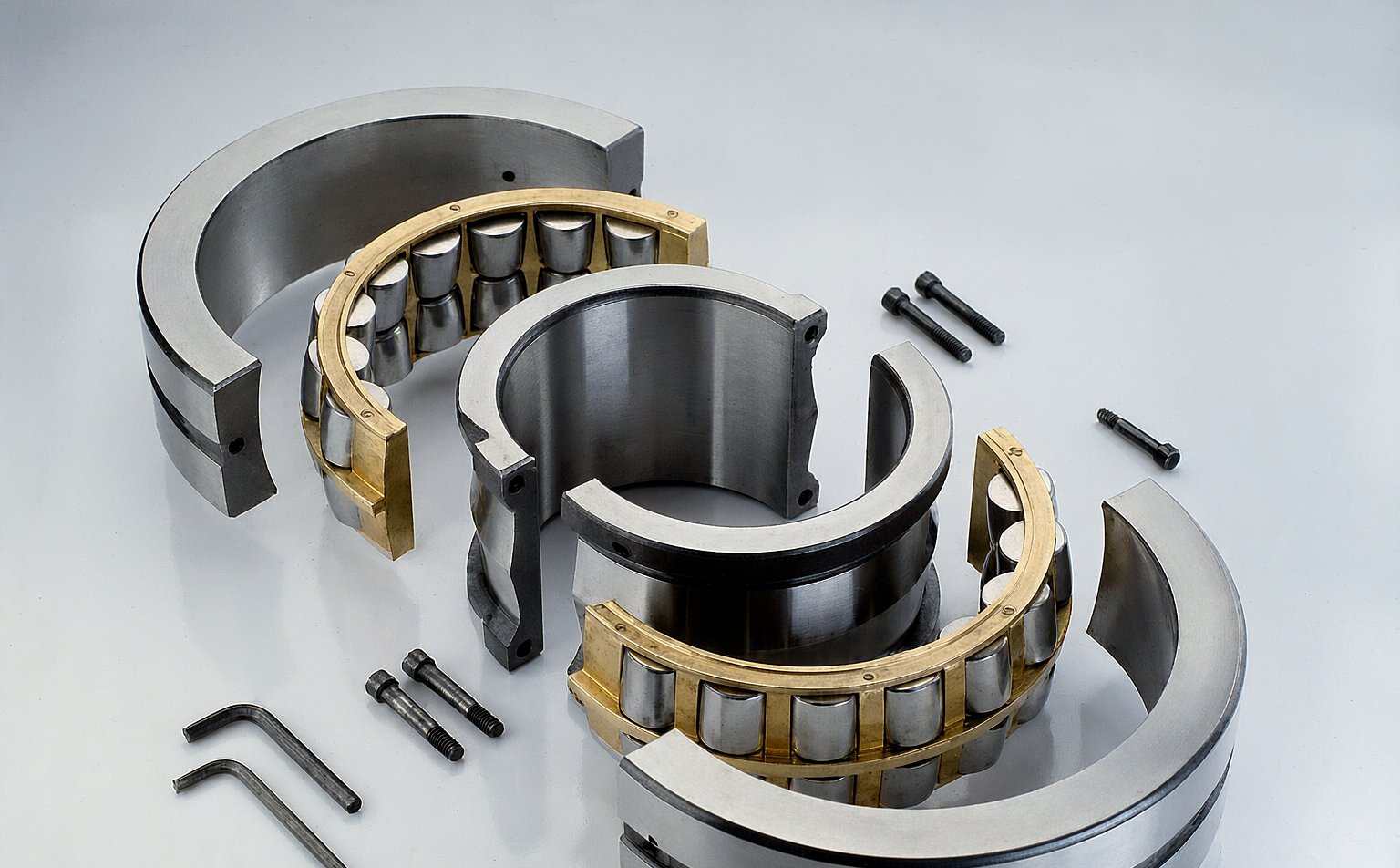
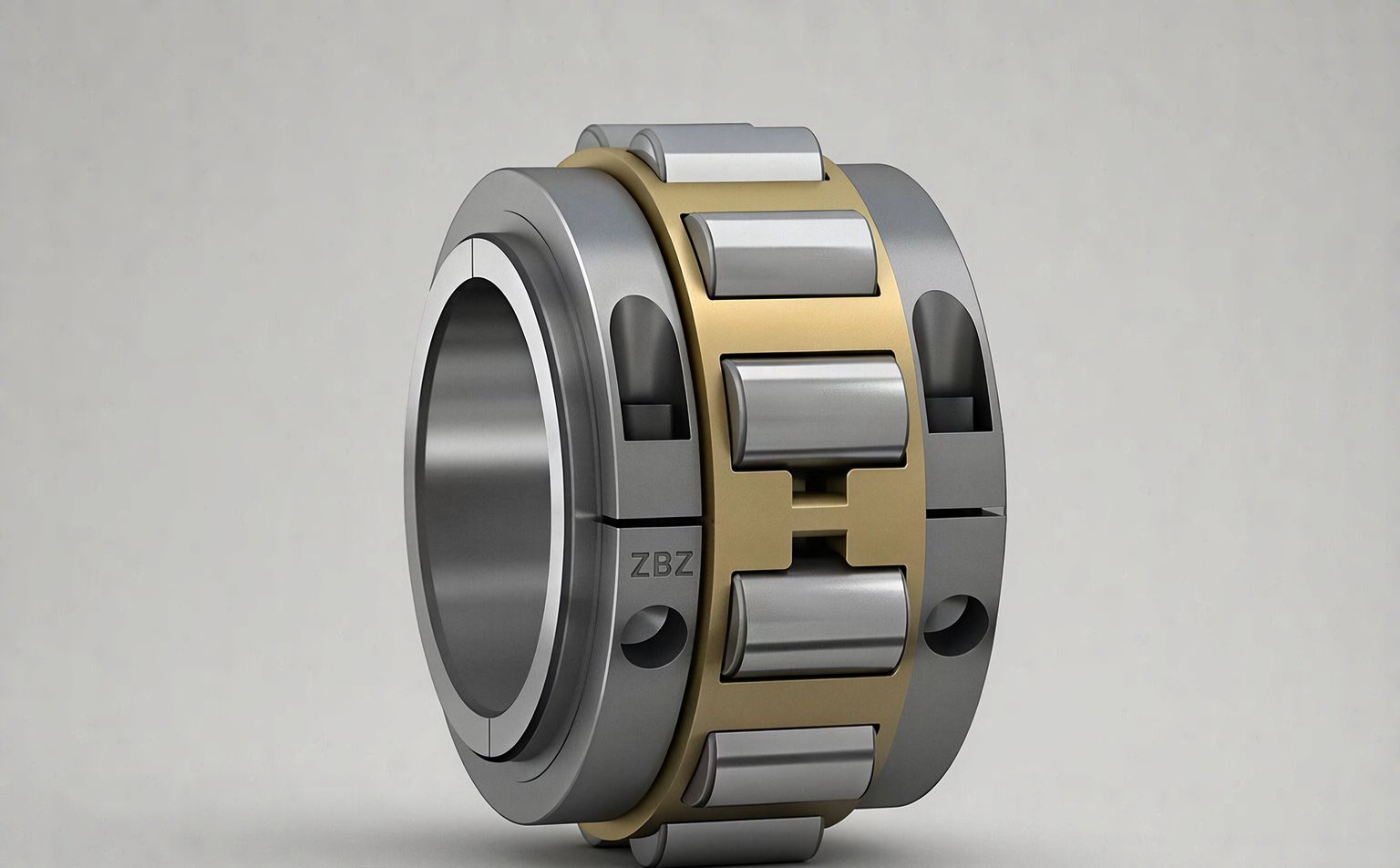
Using a large conveyor pulley bearing change as the example — this is a difference in method, not in bearing quality.
Real downtime: counted in days. Every step can meet a seized bolt, an alignment drift or a site obstruction.
Real downtime: counted in hours. No coupling work, no foundation work, no heaters — a 100 kg-class bearing is a two-person job.
| Item | ZBZ Capability |
|---|---|
| Construction | Inner ring, outer ring, cage and roller assembly each split in two; joint faces precision scraped, raceway continuity across the split specially controlled |
| Size range | Bore Ø 100 – 1,600 mm; large sizes are ZBZ's strong suit |
| Series | Split cylindrical roller bearings; selected per load, speed and installation space |
| Clearance | Calculated per duty and fits; re-measured after the halves are closed, measured values shipped |
| Seals | Split seals, delivered as a package; dust and moisture options for severe duty |
| Package delivery | Split housings, split seals, locking hardware and lubrication interfaces supplied together — close and run on site |
| Material & heat treatment | Case carburising, induction or through hardening selected per duty — balancing contact fatigue and impact toughness |
| Documentation | Material certificates, heat-treatment and inspection records (worded to EN 10204 3.1), mounting instructions |
Clean journal and housing bore; slide in the lower inner-ring and roller halves from below, close the upper halves and torque the inner-ring split bolts to spec.
Wrap and close the outer-ring halves around the roller assembly into the lower housing; the split seals close at the same time — no field-made joints, no leaks.
Re-torque split-face bolts in the specified sequence, re-check clearance and record the measured values; refit housing cap and guards.
Monitor temperature and vibration against the delivered baseline. ZBZ provides written mounting instructions, and engineers can attend your first installation — turning the "first time" into your plant's standard routine.
For discontinued imported parts we reverse-engineer from the used bearing: split positions, locking method and housing bore kept to the original design — your existing housings and habits stay.
The Cooper brand — born in the UK and acquired by Sweden's SKF, becoming today's SKF Cooper — pioneered the split roller bearing; its construction and standards are mature, with a huge installed base across conveying, fans and process industries. ZBZ respects that heritage — we offer another set of answers on sizes, delivery, service and cost, at the same standard.
| Dimension | International brands (SKF Cooper etc.) | ZBZ split bearings |
|---|---|---|
| Construction & standard | Pioneering split design with mature joint-face control and locking systems | Equivalent split construction and scraped-joint standards; raceway continuity across the split specially controlled; measured clearances shipped |
| Size range | Bores from about Ø45 mm up to well over a metre; large sizes long-lead | Ø100–1,600 mm — large and very large bores are ZBZ's strength, built directly on the Wafangdian line |
| Lead time | Catalogue items often ex-stock; large, non-standard or special-seal parts planned overseas in months | Domestic planning with markedly shorter lead times on large sizes; urgent orders assessed for expedited and staged supply |
| Discontinued & special items | Out-of-catalogue legacy and modified parts carry high barriers | Reverse-engineered from drawings or samples: split positions, locking and housing bores kept to the original design, existing housings reused |
| Customisation | Standard series led; seal, clearance and material specials take long cycles | Seal types, clearance, materials and heat treatment engineered to duty, with life re-checked |
| Field service | Wide service network, but deep technical support sits overseas — slow and costly to mobilise | Proposal within 72 hours; engineers attend first installations; failed parts analysed free of charge |
| Package delivery | Bearing, housing and seals usually ordered separately | Split housing + split seals + locking hardware + lubrication interfaces delivered together — one closure on site |
Mining, ports and steel plants: pulley ends sit buried in the structure. Split replacement turns a single-point failure into an hours-long job instead of half a conveyor teardown.
The shaft end carries impeller and coupling; the disassembly chain is long. Split bearings leave the ductwork and shaft line untouched — overhaul windows shrink dramatically.
Heat, dust and non-stop production — every stop is money. Split roller tables restore production first, reusing the existing housing bores.
Deep in the hull, between frames, a one-piece bearing simply cannot be carried in. Split halves enter separately and close in place — a classic class-approved application.
Paper drying cylinders, agitators and extruder main shafts carry process equipment; removing the shaft means redoing half the overhaul. With split bearings, "changing the bearing" changes only the bearing.
Imported split parts discontinued or without a lead time — the plant cannot wait. ZBZ reverse-engineers to the original geometry and keeps your stock, and your line, continuous.
Under normal duty, yes — smooth and quiet. The split design gives up some limiting speed and axial capacity, which is exactly why our selection stage includes mandatory checks; once they pass, there is no compromise in service.
The joint faces are precision scraped and bolted to specified torque; raceway continuity across the split is specially controlled. Factory-measured clearance is re-verified after closing, with both values shipped.
Yes. We reverse-engineer from the used part or drawing, keeping split positions, locking method and housing bores to the original design — your existing housings and tooling stay.
Written mounting instructions ship with every delivery, and a ZBZ engineer can attend your first installation and train your crew — turning the first job into your plant's standard procedure.
Do the downtime maths: stoppage hours per one-piece change × output per hour, versus the split plan. In most conveying and fan duties, a single unplanned stop saved pays the difference — send us the duty and we will run the numbers with you.
Large bores are ZBZ's strength, built on the domestic line with markedly shorter delivery than overseas planning; exact commitments in writing at selection, with expedited assessment available for urgent needs.
A free feasibility and life check within 72 hours, with a downtime comparison — run the numbers first, decide later.
